 X
X
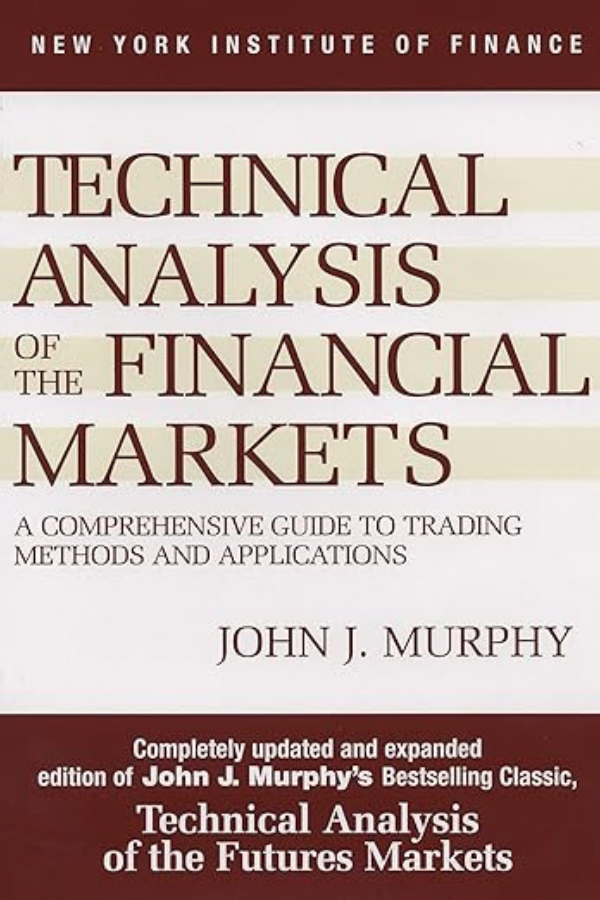
Technical Analysis of the Financial Markets
by John J. Murphy
Publisher: New York Institute of Finance
Publication Date: January 4th 1999
Pages: 576
Format: Hardcover / Kindle / Audiobook
Language: English
Genre: Finance / Non-fiction / Technical Analysis
Amazon Rating:
4.7/5 (2,411)
Goodreads Rating:
4.2/5 (3,830)
"Charts are the footprints of money."
Synopsis
John Murphy’s Technical Analysis of the Financial Markets, or to give it it's full title Technical Analysis of the Financial Markets: A Comprehensive Guide to Trading Methods and Applications is the definitive guide to charting and market behavior for traders, analysts, and finance students. First published in the late '80s and still widely used, it covers everything from basic chart types and trendlines to complex indicators like MACD, RSI, and Elliott Wave Theory. It’s not light reading—it’s a comprehensive, reference-style manual designed to build your technical skills from the ground up.
Quality of Writing and Style
This book reads like a textbook because, well, it is. Murphy doesn’t waste time with fluff or inspiration—he sticks to instruction. The language is formal but clear, and while it can feel dry, it's easy to follow if you're already interested in the material. Charts, diagrams, and examples are used well to illustrate concepts, but make no mistake: this is more academic than entertaining.
Themes and Analysis
The core idea behind Murphy’s work is that market action discounts everything—and that price moves in trends, which can be analyzed through patterns and indicators. He focuses on market psychology as expressed through charts, supporting the idea that history tends to repeat itself. It’s a pure technical analysis book—no fundamental distractions, no hot takes. Just price, volume, patterns, and probability.
Strengths and Weaknesses
The biggest strength is the book’s depth and thoroughness. It’s basically the technical analysis bible. Whether you’re learning about moving averages or chart formations, it’s all here. But the same strength is also a barrier—this book is heavy, dense, and sometimes overwhelming. There’s very little modern trading context (like algorithmic trading or crypto), and the writing assumes a lot of commitment from the reader.
Audience and Recommendation
This is a must-read for serious traders, technical analysts, and finance students who want to go beyond the basics. It’s best for those who are methodical and prefer structure. If you’re looking for a motivating “why,” you won’t find it here—this is strictly about the “how.” Casual investors or beginners might be better off starting with something more digestible.
Personal Reflection and Conclusion
Reading Technical Analysis of the Financial Markets is like lifting weights for your trading brain. It’s not always fun, but it’s solid. It won’t hype you up—but it’ll make you sharper. It’s the kind of book you return to again and again as you grow, and that alone makes it worth the shelf space.
My Rating: 8/10
Dense, serious, and foundational. Not for everyone—but invaluable for those willing to do the work.
If you read this, you’d likely also benefit from Encyclopedia of Chart Patterns by Thomas Bulkowski, Trading in the Zone by Mark Douglas, or Japanese Candlestick Charting Techniques by Steve Nison.