 X
X
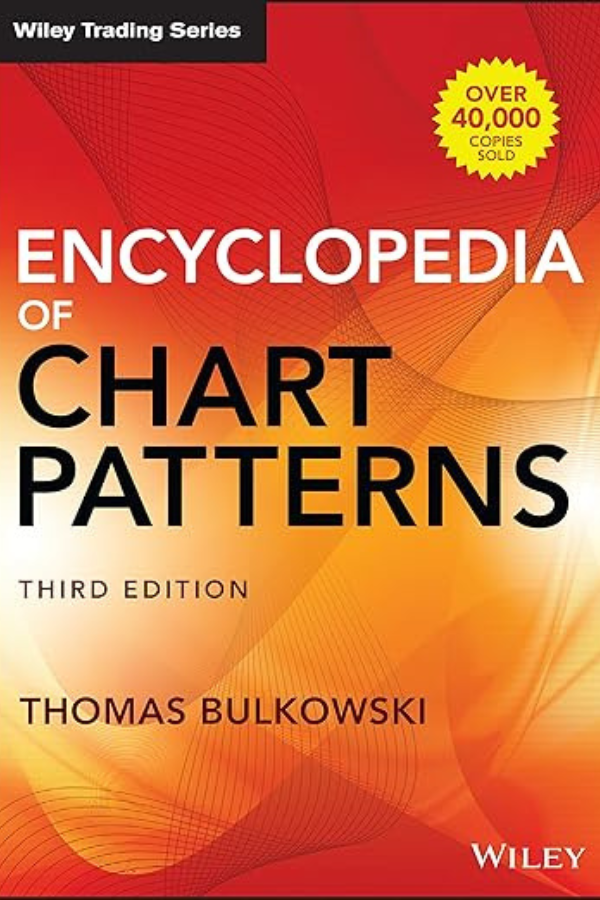
Encyclopedia of Chart Patterns
by Thomas Bilkowski
Publisher: Wiley
Publication Date: April 27th 2021
Pages: 1,312
Format: Hardcover / Kindle / Paperback / Audiobook
Language: English
Genre: Finance / Non-fiction / Technical Analysis
Amazon Rating:
4.5/5 (253)
Goodreads Rating:
4.1/5 (359)
"Chart patterns are footprints of the herd; they reflect human behavior on a grand scale."
Synopsis
Thomas Bulkowski’s Encyclopedia of Chart Patterns is exactly what it sounds like: a massive, data-rich reference book covering nearly every chart pattern imaginable. From head-and-shoulders to flags, triangles, and obscure formations you didn’t know existed, Bulkowski doesn’t just explain what they look like—he backs them up with stats, success rates, and behavioral tendencies based on decades of historical analysis. This isn’t a light read. It’s a tool, and it’s meant to be used like one.
Quality of Writing and Style
Bulkowski’s writing is clear, methodical, and academic. He doesn’t waste time with theory or inspiration—he gives you the raw data, the structure, and the performance numbers. It reads more like a research paper than a trading guide, which is both its strength and its barrier. You’re not here to be entertained; you’re here to dig deep into pattern probabilities, setups, and trading implications.
Themes and Analysis
The core message of the book is that patterns aren’t just pictures—they’re historical footprints of collective psychology, and they can be quantified. Bulkowski treats technical analysis like science: test, measure, refine. He reinforces that no pattern is perfect, and that context, volume, and breakout behavior all matter. This is as far from intuitive, gut-based trading as you can get. It’s trading by numbers.
Strengths and Weaknesses
The depth and detail are unmatched. If you're serious about technical trading, this is one of the best references ever written. The statistical breakdowns—failure rates, average gains, breakout performance—turn vague chart-watching into evidence-based decisions. The downside? It’s dense, dry, and requires patience. It’s not a how-to book or a strategy playbook—it’s a reference manual. You have to know what you're looking for to really benefit from it.
Audience and Recommendation
This book is perfect for intermediate to advanced traders, especially those who rely heavily on technical analysis. Quants, pattern traders, and analysts will love it. If you're new to trading or looking for motivation, skip this for now. But if you want to test assumptions and sharpen your edge with actual data, this belongs on your shelf—ideally next to a highlighter and a spreadsheet.
Personal Reflection and Conclusion
Encyclopedia of Chart Patterns isn’t the kind of book you read cover to cover—it’s the kind you keep nearby and refer to often. It’s made me rethink how I view pattern recognition—not as art, but as math. It won’t teach you how to trade, but it will help you trade smarter—if you’re willing to do the work.
My Rating: 8.5/10
A technical masterclass in pattern analysis. Dry? Yes. Useful? Absolutely. This is one of the most thorough trading references available.
If you read this, you’ll likely also appreciate Technical Analysis of the Financial Markets by John Murphy, Japanese Candlestick Charting Techniques by Steve Nison, or Trading in the Zone by Mark Douglas for the mental side of the game.