 Could Peace Talks Restore Evraz Shareholder Rights?
 X
X
Could Peace Talks Restore Evraz Shareholder Rights?
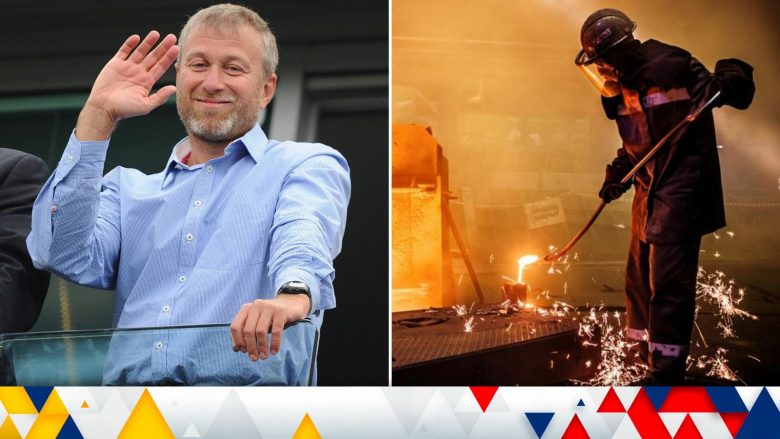
A Turning Point for Investors: Can Evraz Overcome Sanctions and Russia’s ESO Law.
Russia's New ESO Law: A Game Changer for Foreign Investors
On August 4, 2023, the Russian government enacted Federal Law No. 470-FZ, known as the Economically Significant Organizations (ESO) Law, which came into force on September 4, 2023. This legislation further complicates an already challenging environment for foreign-owned businesses in Russia. Prior to this, Evraz, a UK-listed steel and mining giant with substantial operations in Russia, had already faced significant restrictions due to UK government sanctions imposed in 2022. These sanctions froze company assets, prevented dividend payouts, and severely limited corporate governance, leaving shareholders with little influence. Now, with Evraz being added to the ESO list on January 4, 2025, the situation has escalated, placing even more constraints on shareholder rights and further removing foreign investors from any decision-making power.
The ESO Law effectively freezes the rights of foreign shareholders in designated Russian companies, preventing them from voting, selling their shares, or receiving dividends. While this may appear to be outright nationalization, the law instead imposes an indefinite suspension of foreign ownership rights rather than direct expropriation. This situation raises critical questions for investors: Will their shares ever be unfrozen? What happens to dividends during the suspension? Is there any realistic hope of regaining control?
While Russia’s ESO law is the latest blow to foreign investors, the UK government’s actions have, ironically, done more to benefit Russian shareholders than their own. By imposing sweeping sanctions on Evraz in 2022, the UK government effectively paralyzed the company’s ability to operate as a publicly traded entity, stripping shareholders of voting rights and dividend access. These measures, while aimed at punishing Russian-linked individuas and entities, have primarily impacted Western investors. UK-based retail and institutional shareholders, who once had a stake in one of the world’s leading steel producers, have found their assets trapped, while Russian shareholders—who remain outside of UK jurisdiction—have been relatively shielded from the consequences.
The failure to provide shareholder protections or a clear path forward for UK and international investors raises serious concerns. There has been no effort to negotiate carve-outs for shareholders affected by the sanctions, nor has there been any legal mechanism introduced to help investors reclaim their financial interests. In effect, UK policy has enabled Russia to consolidate control over Evraz’s domestic operations, while Western investors are left in a legal limbo with no means of enforcing their rights. This approach stands in stark contrast to the proactive efforts made in other cases of asset seizures, where governments have pursued diplomatic or legal avenues to protect their own citizens' financial interests.
Many Evraz shareholders are based in the UK, the US, and other countries classified by Russia as "unfriendly nations." Given this international scope, it is crucial to examine the response of Western governments in addressing investor concerns. The UK, US, and EU have yet to establish a clear path for shareholder protections, leaving investors in a legal and financial limbo. Potential avenues include diplomatic engagement, legal challenges, or the establishment of compensation mechanisms. As the situation continues to evolve, a comprehensive discussion is necessary to understand what has transpired, what could happen next, and what steps may be taken to safeguard shareholder rights in the face of these escalating restrictions.
Historical Context: Evraz, Sanctions, and the Ukraine Conflict
To fully understand Evraz’s current situation, it is essential to examine its history, its role in the global steel industry, and how it became entangled in international sanctions following Russia’s invasion of Ukraine.
Evraz, originally founded in Russia, grew into one of the world’s largest vertically integrated steel and mining companies. Over time, it expanded its operations across multiple countries, listing its shares on the London Stock Exchange and establishing a presence in the UK, the US, Canada, and Kazakhstan. Despite being headquartered in the UK, Evraz’s most valuable assets and operational control remained in Russia, making it highly vulnerable to geopolitical turbulence.
When Russia launched its military operation in Ukraine in February 2022, Western nations, including the UK and the US, responded with a wave of economic sanctions targeting Russian businesses and oligarchs. Evraz soon found itself in the crosshairs. By May 2022, the UK government imposed sanctions on Evraz Plc, freezing its assets and restricting financial transactions. The justification for these sanctions was that Evraz was allegedly supplying materials that could support Russian military operations. However, to this day, there is limited publicly available evidence to suggest that Evraz directly aided Russia’s war efforts.
One of the most notable figures linked to Evraz is Roman Abramovich, the Russian billionaire widely known as the former owner of Chelsea FC. Before the UK government sanctioned him in March 2022, Abramovich held a 28.6% stake in Evraz. His assets were frozen, preventing him from selling his shares or exerting influence over the company. Despite these sanctions, Abramovich became an unexpected diplomatic figure, playing a key role in early Russia-Ukraine peace negotiations. His involvement was so significant that Ukrainian officials acknowledged his contributions, although this did not change the UK’s stance on his sanctions.
The sanctions imposed on Evraz had an immediate and devastating impact on its investors. Trading in Evraz shares was halted on the London Stock Exchange, effectively locking shareholders out of their investments. Without a way to trade or liquidate their holdings, UK investors found themselves in a state of uncertainty, with no clear resolution in sight.
On January 24, 2025, JSC Evraz NTMK, a subsidiary of Evraz Plc, was officially added to Russia’s list of Economically Significant Organizations (ESO). At the time of writing, the company has acknowledged this designation but has stated that it has not yet gone through the ESO process. Evraz’s leadership has committed to reviewing the legislation and its implications while seeking to protect the interests of both the company and its shareholders. This means that while Evraz has been identified as subject to the ESO framework, the full effects of the law have yet to be applied.
While the inclusion of Evraz NTMK on the ESO list signals a potential shift in the company’s structure, its full transition under the law remains uncertain. Unlike other companies that have already undergone the process and seen their foreign shareholder rights suspended, Evraz is still in a phase of legal evaluation and response. How this unfolds in the coming months will be crucial in determining whether Evraz follows the path of other firms that have lost control of their Russian operations or whether alternative resolutions emerge.
How Russia’s ESO Law Affects Evraz and Its Foreign Shareholders
With Evraz already entangled in sanctions and geopolitical uncertainty, the introduction of Russia’s Economically Significant Organizations (ESO) Law has further complicated the situation. The law, which came into effect on September 4, 2023, grants the Russian government the authority to suspend the corporate rights of foreign shareholders in designated companies and transfer ownership to Russian beneficiaries.
In January 2025, Evraz’s Russian subsidiary, JSC Evraz NTMK, was officially added to Russia’s ESO list. This designation places Evraz Plc, the UK-listed parent company, at risk of losing control over its Russian operations. While the ESO process has not yet been initiated, the inclusion on the list signals that further restrictions may be imposed, creating additional uncertainty for shareholders.
Foreign shareholders, including Evraz Plc, face the possibility of losing their ability to vote on company decisions. If the ESO process proceeds, it could remove any influence foreign investors once had over the governance and strategy of Evraz’s Russian operations. Additionally, all dividends due to foreign shareholders would be frozen indefinitely, meaning that while Evraz’s Russian business continues to generate revenue, foreign investors may be unable to access any portion of the company’s profits.
The law also prohibits foreign shareholders from selling, transferring, or liquidating their shares. This leaves UK investors in a situation where they still own Evraz shares but have no ability to exercise their rights or cash out their investments. Meanwhile, Russian shareholders are required to convert their indirect holdings into direct ownership within the Russian subsidiary, shifting control away from the foreign parent company.
At first glance, these measures resemble a form of nationalization. However, the Russian government has framed them as a suspension rather than outright expropriation. This distinction is significant because, in theory, foreign investors retain ownership of their shares, but their ability to exercise any of their rights remains on hold until the Russian government decides otherwise.
One of the biggest concerns for investors is the fate of dividends. The ESO law indicates that dividends owed to foreign shareholders will be withheld rather than permanently seized. If sanctions are lifted or a geopolitical agreement is reached, these dividends could potentially be paid out retroactively. However, there is no guarantee of when, or if this will happen, leaving foreign investors in a prolonged state of uncertainty.
As it stands, Evraz’s Russian assets remain operational, but they are now under increasing scrutiny from Russian authorities, with limited input from foreign shareholders. Whether these suspensions will be lifted in the future or extended indefinitely depends on the evolving geopolitical landscape. Without intervention or resolution, UK-listed Evraz Plc may remain permanently disconnected from its most valuable assets in Russia.
X5 Retail Group as a Case Study
To understand the possible long-term consequences for Evraz, it is useful to examine the case of X5 Retail Group, a Dutch-based company that operated one of Russia’s largest supermarket chains. X5 provides a clear precedent for how the ESO law has already been applied and the impact it has had on foreign shareholders.
In March 2024, the Russian government designated X5’s Russian subsidiary as an ESO. Shortly afterward, the Moscow Arbitration Court ruled to suspend the rights of its foreign parent company, removing its ability to manage or financially benefit from its Russian assets.
As a result, X5’s foreign shareholders lost control over the business. Russian investors were given direct ownership of X5’s Russian operations, while the Dutch-listed parent company was left with no say in the matter. The supermarkets continued to operate, but the foreign investors who had financed the company’s growth were cut off from any returns. They were unable to vote, receive dividends, or sell their shares.
Unlike other cases where foreign shareholders were completely locked out, X5 Retail Group initiated an effort to secure compensation for its investors. In November 2024, the company held an Extraordinary General Meeting (EGM), during which shareholders were presented with two options—either to recover 10.22% of their shares in X5 Corporate Center PJSC (X5CC) or to opt for cash compensation. A decisive 99.22% of votes cast were in favor of cash compensation, leading to a formal request for payout under Russian government resolution No. 1835.
While this marked a rare instance of a structured exit for foreign investors, the process has been hindered by delays. The compensation was expected to be paid by February 1, 2025, but X5CC has yet to obtain the necessary regulatory approvals. To keep the possibility of compensation open beyond the December 31, 2024 deadline, X5CC filed a request to extend the suspension of the company’s corporate rights. The company has stated its commitment to proceeding with the payments once approvals are secured, but the situation remains unresolved.
The exact monetary value of the compensation has not been publicly disclosed. The payout is expected to reflect the market value of the undistributed shares in X5CC at the time of compensation. However, without clarity on the valuation methodology or a firm regulatory timeline, it remains uncertain when and how much foreign shareholders will ultimately receive.
The case of X5 illustrates both the risks and the limited opportunities available to foreign shareholders under the ESO law. Unlike many other companies where no compensation process has even been discussed, X5’s management at least sought a resolution, albeit one that remains stalled by bureaucratic barriers.
For investors in Evraz, this raises critical questions. If Evraz is subjected to the full ESO process, will the company be able to negotiate a compensation package for foreign shareholders, or will it face a more rigid transfer of ownership without reimbursement? X5’s experience suggests that even when compensation is promised, regulatory challenges can significantly delay, if not completely obstruct, payments.
With X5’s example as a reference point, it becomes clear that unless there is a significant shift in political dynamics or diplomatic intervention, foreign shareholders in Evraz could remain locked out indefinitely. The UK government and other affected parties will need to act quickly if they hope to protect investor interests and prevent further financial losses.
The Latest Peace Efforts and Their Potential Impact
With the ESO law now fully in effect and Western companies losing control over their Russian assets, geopolitical negotiations have become more critical than ever. The recent peace efforts involving Donald Trump, Vladimir Putin, and Volodymyr Zelensky play a pivotal role in determining whether foreign investments in Russia have any future.
Reports suggest that Trump, who has long positioned himself as a dealmaker, is pushing for an immediate peace agreement between Russia and Ukraine. If a deal is reached, it could create conditions for the removal of sanctions, which in turn could mean a reversal of the ESO law’s effects. For investors in Evraz and other companies affected by the law, a peace agreement could be the difference between financial recovery and continued uncertainty.
One key figure in past negotiations has been Roman Abramovich. Despite being sanctioned by the UK and the EU, Abramovich was not sanctioned by the US, which suggests that he may still hold some degree of diplomatic influence. In 2022, he played a behind-the-scenes role in early peace talks between Russia and Ukraine. Ukrainian officials even acknowledged his contributions, despite his controversial status in the West. If Abramovich once again engages in peace discussions, it could have direct implications for Evraz, given his prior stake in the company.
While optimism around peace talks continues to circulate, lifting sanctions and reversing the ESO suspensions would require complex international negotiations. Russia has made no indication that it is willing to return control of designated ESOs to foreign shareholders, even if Western sanctions are eased. This raises a critical question— even if peace is achieved, will Russia reverse course on foreign asset suspensions?
The lack of clarity from the Russian government means that Evraz investors cannot assume that the end of sanctions will automatically restore their rights. It is entirely possible that Russia may choose to maintain ESO restrictions as a means of permanently shifting control of key industries to domestic stakeholders. If that is the case, foreign investors may never see their ownership rights fully reinstated, even if a peace deal is reached.
What Can the UK Government Do to Protect Shareholders?
One of the biggest criticisms of the UK government is that it has not taken meaningful action to protect investors who hold shares in companies like Evraz. While other Western governments have explored legal and diplomatic options to secure investor rights, the UK has focused solely on enforcing sanctions, offering no clear path forward for affected shareholders.
The UK government has been unwavering in its stance against Russia, prioritizing economic restrictions over investor protections. However, this approach has left thousands of shareholders in a legal and financial limbo. Evraz was a FTSE 100 company, a major dividend payer, and a staple of pension funds across the UK, the US, and Europe. Many pensioners and small investors relied on its dividend income, and now they find themselves unable to access their rightful investments. The effects of this extend beyond just wealthy shareholders—ordinary pensioners, institutional funds, and retirement accounts have suffered due to the lack of action. Without intervention, UK, US, and European investors could face permanent losses due to the ESO process, unable to access dividends, sell shares, or regain control over their investments. This is not just a failure of economic policy; it is a failure to uphold the rights of everyday citizens whose financial security has been disregarded.
The UK, US, and European governments have an obligation to protect their investors under international treaties and trade agreements. Evraz Plc was not just a UK company; it had a wide shareholder base that included American and European investors, making this an issue that extends beyond Britain. The UK government must engage in diplomatic negotiations that explicitly include provisions for the recovery of foreign assets. If the UK, US, and EU participate in peace discussions with Russia, they must demand that any agreement include the reinstatement of shareholder rights for those affected by the ESO law.
Additionally, the UK government should pursue legal challenges through international arbitration. In similar situations, countries have used mechanisms such as the World Trade Organization (WTO) and international investment treaties to dispute asset expropriations. If the UK takes this route, it could provide investors with legal avenues to claim compensation or push for the restoration of their shareholder rights.
If the ESO law ultimately results in UK, US, and European investors being stripped of their assets, the UK government must also establish compensation mechanisms. The US has previously set up shareholder compensation funds for citizens impacted by foreign asset seizures. There is no reason why the UK should not follow suit. A dedicated fund could provide affected Evraz investors with some degree of financial recovery and ensure that British, American, and European citizens are not the ones left paying the price for geopolitical conflict.
The UK government’s failure to act is an outright betrayal of its own citizens. Evraz was once a flagship FTSE 100 company, widely held by pension funds, institutional investors, and private shareholders, yet those affected have been abandoned. The government cannot claim to protect British financial interests while allowing Russian investors to assume control of British-owned companies without consequence. The lack of diplomatic engagement, legal recourse, or compensation for affected investors is not just negligence—it is a dereliction of duty. If the UK refuses to fight for its own investors, what message does that send to global markets? The time for inaction is over. It is the government’s responsibility to ensure that those who invested in good faith are not left with nothing.
Future Scenarios: What Happens Next?
The situation remains highly fluid, with multiple potential outcomes that could shape the fate of Evraz and its foreign shareholders in the coming months and years. The resolution of this crisis will depend on geopolitical developments, diplomatic negotiations, and the extent to which Western governments engage in efforts to protect their investors.
If peace is achieved and sanctions are lifted, there is a possibility that Russia may choose to reinstate foreign shareholder rights. In this scenario, Evraz investors could reclaim their holdings and regain access to the unpaid dividends that have been frozen under the ESO law. Such an outcome would offer investors a path toward financial recovery, restoring some level of normalcy to the company’s corporate structure.
A less optimistic scenario involves the indefinite extension of ESO suspensions. If the war continues or if Russia decides that foreign-owned businesses should remain under local control, the ESO law could remain in effect indefinitely. This would effectively lock out foreign shareholders on a long-term basis, leaving their investments in limbo without a clear resolution.
The most severe scenario would be the full nationalization of Evraz’s Russian operations. In this case, Russia could go beyond the ESO framework and permanently convert Evraz’s Russian assets into state-controlled entities. This would mean that foreign shareholders would never regain access to their investments, rendering their holdings in Evraz Plc worthless.
However, even if sanctions were lifted and Russia allowed Evraz Plc to regain control over its Russian assets, another key question remains: would Evraz even want to stay listed in the UK? The UK government’s handling of Evraz, from its aggressive application of sanctions to its failure to support affected shareholders, has made London an increasingly hostile environment for companies with any exposure to Russia. The once-prestigious FTSE 100 listing provided stability and access to global capital, but now it represents a jurisdiction where political interference can render even a successful, dividend-paying company uninvestable overnight.
If Evraz is ever in a position to restructure and relist, it may well seek alternative financial markets where investor rights are protected rather than disregarded for political convenience. Other jurisdictions, such as Hong Kong, Dubai, or even a Moscow re-domiciliation, could provide a more stable environment where companies are not arbitrarily frozen out of financial markets. This would not only be a blow to UK investors who once saw Evraz as a blue-chip stock but also a warning to other businesses that London is no longer a secure home for companies with international exposure.
The most likely outcome remains uncertain, as it hinges on multiple political and economic factors. If Western governments step up diplomatic efforts and demand foreign investor protections, it could pressure Russia into reversing some of the restrictions. However, if diplomatic engagement remains limited, there is a real risk that the ESO law will serve as a permanent tool for redistributing foreign-owned businesses into Russian hands. In the meantime, the UK government’s failure to protect investors raises an entirely different concern—why would any international company, particularly one with exposure to geopolitical tensions, ever trust London as a reliable investment hub again?
Conclusion
The fate of Evraz and its foreign shareholders remains uncertain, but there is still reason for cautious optimism. While the implementation of Russia’s ESO law has created significant barriers for investors, history has shown that geopolitical and economic conditions are never static. The tides of diplomacy, trade, and financial necessity have a way of shifting, often in unexpected ways.
At the time of writing, there is growing momentum behind peace efforts, with renewed diplomatic engagement between key global leaders. While a final resolution to the Russia-Ukraine conflict is not yet in place, the conditions for at least a ceasefire appear stronger than they have been in years. If a truce is established, it could create the framework for a phased reduction of sanctions, and in turn, the gradual reintroduction of foreign ownership rights in Russia.
As things stand, I believe the most probable outcome is that Evraz will eventually return to normal trading for all shareholders, though likely under a different structure. If sanctions are lifted and foreign investors regain access to their holdings, the company will need to reassess its global operations. Given the UK government's handling of the situation, it is difficult to imagine Evraz Plc maintaining its London listing in the long run. Instead, it is far more likely that the company will seek a more stable financial hub—whether that be Dubai, Hong Kong, or even a full re-domiciliation within Russia itself.
While there is still significant uncertainty, this is not yet a closed chapter. Economic pressures, investor demands, and geopolitical shifts all play a role in determining the long-term viability of the ESO law and its impact on companies like Evraz. The most precarious moment for investors is always when political risk is at its highest—but as history has demonstrated, political environments evolve, sanctions are not permanent, and markets always find a way to recalibrate.
For those who have seen their investments locked away, the coming months and years will be critical. Evraz is not a failed company; it remains a functioning business with valuable assets, strong operations, and a proven global track record. While the circumstances surrounding its stock have been deeply frustrating for shareholders, the long-term trajectory still points towards a future where ownership rights are restored, and trading resumes. Perhaps not in London, but somewhere that ensures the rights of all investors are protected and upheld.
Take control of your financial future with MoneyIQ. Track your net worth in real-time, gain AI-powered insights, and make smarter financial decisions. Get started today and take the first step toward financial freedom.
Disclaimer
This article is for informational purposes only and should not be considered financial advice. Always conduct your own research and consult with a qualified financial advisor before making any investment decisions.
MoneyIQ Team