 Cash & Coffee
 X
X
August 6th, 2025 0
Cash & Coffee
August 6th, 2025 0
Cash & Coffee is your daily MoneyIQ briefing, delivering sharp, actionable insights on markets, trends, and opportunities for retail investors.
Markets steadied on Tuesday as strong earnings and rate cut hopes were offset by weaker services data, renewed tariff threats, and persistent concerns over China’s economic slowdown. Political risks added further complexity, while crypto markets remained subdued, with sentiment turning neutral despite ongoing institutional accumulation.
As volatility lingers, retail investors face a delicate balance between opportunity and caution. With macro data, central bank signals, and sector rotation all in play, Cash & Coffee helps you stay ahead of the curve. Subscribe now and make smarter moves in a noisy market.
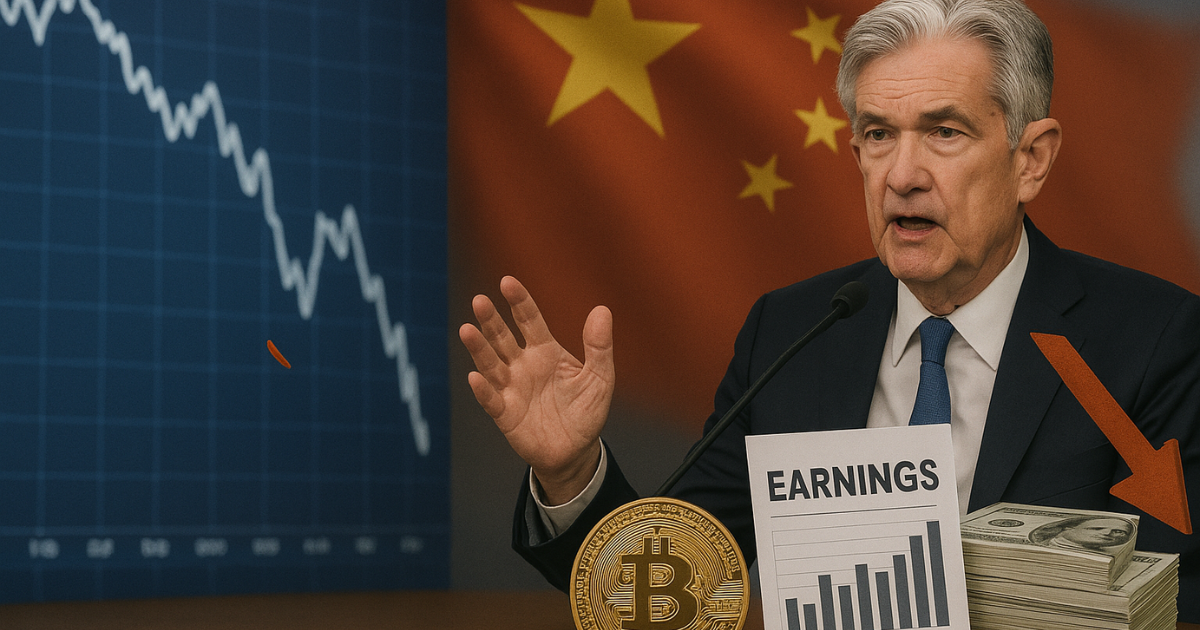
Markets steady as services data weakens, tariff risk resurfaces, and China drags. Earnings remain a bright spot, while crypto stalls amid neutral sentiment and selective institutional buying.
Retail Investor Outlook
Global Stocks Steady as Tariff Tensions and Services Slump Offset Earnings Optimism
Global markets struggled to maintain Monday’s momentum on Tuesday, 5 August 2025, as investor confidence was tested by a wave of macroeconomic and political crosscurrents. While strong earnings and rate-cut speculation continued to offer support, new signs of global strain, ranging from weaker services data and China fatigue to fresh tariff concerns, kept risk appetite muted.
In the U.S., stocks ended lower as enthusiasm over Fed rate cuts clashed with softer services activity and renewed fears of trade disruption. The ISM Services Index surprised to the downside, suggesting the post-pandemic services boom may be losing steam. Meanwhile, the White House hinted at new tariff frameworks targeting China and India, raising the spectre of global supply chain friction just as inflation shows signs of cooling. Although certain AI-linked firms continued to report strong results, the broader mood in equities turned cautious.
European markets fared slightly better. The FTSE 100 and Euro Stoxx 50 closed higher, helped by robust earnings and expectations that central banks will pivot to looser policy in the months ahead. However, optimism was tempered by broader geopolitical tension and sector-specific risks. Notably, Tesla’s European sales were reportedly hit by backlash against Elon Musk’s political commentary, affecting consumer sentiment in key EV markets. Elsewhere, Hugo Boss reaffirmed its strategy amid potential U.S. tariff exposure, and staffing giant Adecco flagged rising demand in defence-linked industries as a niche area of strength within an otherwise patchy hiring landscape.
In currency markets, the U.S. dollar strengthened as investors priced in upcoming inflation data and potential changes to the Fed’s leadership team. Sterling also gained ground, with traders positioning ahead of the Bank of England’s next guidance on interest rates, which could shift dovishly if domestic data weakens further.
China remained a consistent source of unease. Weak economic data, sluggish property sector activity, and growing doubts over the effectiveness of Beijing’s stimulus measures continued to drag on sentiment, particularly in export-heavy and commodity-sensitive sectors. These concerns spilled over into the energy space, where oil prices retreated despite geopolitical jitters. OPEC’s decision to increase output dampened price momentum, overshadowing potential Russian supply disruptions.
For retail investors, Tuesday’s mixed session highlights the importance of navigating noise with a clear focus on fundamentals. Earnings strength, defensive positioning, and macro awareness remain essential as markets react sharply to both data surprises and political signals. This environment favours careful selection over broad exposure, and rewards those tuned in to sector rotation, geopolitical triggers, and monetary policy signals.
💹 Market Indices Overview (5 August 2025 Close)
- Dow‑Jones Industrial Average (US): 44,111.74 −0.14%
- S&P 500 (US): 6,299.19 −0.49%
- Nasdaq Composite (US): 20,916.55 −0.70%
- FTSE 100 (UK): 9,142.73 +0.16%
- EURO STOXX 50 (Eurozone): 5,249.59 +0.14%
📉 Why It Matters
- Services sector loses steam: A weaker-than-expected ISM Services Index raised new doubts about U.S. consumer demand and growth momentum as costs rise and activity cools.
- Tariff threats resurface: Renewed rhetoric around U.S. tariffs on China and India introduced fresh supply chain risk, unnerving global multinationals and industrials.
- China stimulus concerns deepen: Despite earlier support measures, investors are losing confidence in Beijing’s ability to meaningfully revive domestic demand, especially in the property sector.
- Mixed currency signals: The dollar firmed on upcoming inflation data and Fed appointments, while the pound gained as markets looked to the BoE for clarity on rate cuts.
- Earnings drive selective strength: Positive results from companies like Hugo Boss and Adecco reinforced the value of earnings quality, but gains were not evenly spread.
- Geopolitics hits brands: Tesla’s European sales were reportedly affected by backlash against Elon Musk’s political comments, a reminder that reputational risk can impact even dominant names.
🌍 Investment Ideas to Watch
Three retail-accessible names in the U.S., U.K., and Europe that align with today’s themes of selective growth, macro defensiveness, and global rotation:
-
Axon Enterprise Inc. (NASDAQ: AXON) – United States:
A leading public safety tech firm with embedded AI across its platform, Axon delivered strong quarterly results driven by recurring software revenue and expanding government contracts. As fiscal pressure builds on municipalities to modernize policing, Axon’s ecosystem of body cams, cloud storage, and AI analytics positions it as a durable growth story with defensive traits.
📄 Read the full AXON investment report -
Adidas AG (ETR: ADS) – Europe:
A leading global sportswear brand, Adidas is seeing steady recovery in key markets, with demand returning across lifestyle and performance segments. Recent results point to resilient consumer spending in Europe and Asia, while improved supply chain efficiency is supporting margins. For investors seeking quality exposure to global discretionary consumption, Adidas offers a balanced mix of brand strength and geographic diversification.
📄 Read the full ADS investment report -
Rolls-Royce Holdings plc (LSE: RR) – United Kingdom:
Rolls-Royce is gaining investor attention with a strengthening order pipeline in both aerospace and defence. Recent commentary from Adecco on rising hiring trends in defence-related industries highlights the sector's momentum. For investors seeking exposure to industrial recovery and government-backed demand, Rolls-Royce offers a compelling turnaround story.
📄 Read the full RR investment report
💡 For Retail Investors
- Look beyond the index: Market gains were shallow and sector-specific—focus on names with strong earnings and macro alignment.
- Don’t ignore reputational risk: Tesla’s European backlash highlights that brand perception matters, even for market leaders.
- Defence is gaining traction: As Adecco noted, defence-linked hiring is rising—investors may want to explore adjacent beneficiaries.
- China drag remains real: Investors should remain cautious on China-exposed names until signs of real recovery appear.
- Balance your exposure: Mix growth with defensives, and stay alert to sudden changes in political tone or data surprise.
📝 Final Thoughts
Tuesday’s market tone reflected fragility beneath the surface. While earnings remain strong in select areas and rate-cut hopes provide a tailwind, the presence of multiple risk factors, from weak U.S. services data and renewed tariffs to China’s persistent malaise, means retail investors should be both selective and diversified.
Those focused on quality earnings, sector resilience, and global macro context may find opportunities in areas like AI-infrastructure, defence contracting, and consumer brands with stable cash flows. In volatile conditions like these, staying alert to policy shifts and sentiment drivers is just as important as watching the charts.
Macro Matters: Fed Uncertainty, Trade Deficits, and PMI Warnings
Political and economic signals are once again converging to shape an uncertain outlook for retail investors. President Trump’s confirmation that he will appoint a new Federal Reserve governor by week’s end, alongside his public exclusion of Scott Bessent as a successor to Jerome Powell, has heightened speculation about a potentially more politically aligned central bank. The narrowing shortlist of candidates has reignited concerns over Fed independence, which could influence market confidence and long-term policy expectations. Meanwhile, the latest ISM data showed that U.S. services growth flatlined in July, its weakest performance this year, while the trade deficit fell to a two-year low, a move driven more by softening import demand and tariff-related distortions than genuine strength.
Canada’s macro picture also darkened. The country posted its second-largest trade deficit on record in June, fueled by a sharp drop in exports. While Canadian officials described trade talks with the U.S. as constructive, the imbalance highlights growing fragility in cross-border flows and export competitiveness. In Europe, the story was mixed. Germany reported modest services growth, but France slipped into contraction territory as political uncertainty weighed on consumer and business confidence. The UK, meanwhile, posted the sharpest drop in services orders since 2022, adding to recession fears. However, expectations of a 4.1% rise in the UK minimum wage next year underscore the inflationary pressure still embedded in the economy.
All this sets the stage for a volatile end to the week. Retail investors are now watching for signals from shifting Fed leadership, deteriorating PMI trends, and widening trade gaps across major economies. With monetary policy increasingly politicized and global growth losing momentum, the FX market has begun to reflect heightened risk. The U.S. dollar is under pressure from dovish expectations, the Canadian loonie faces headwinds from trade weakness, and the euro and pound are being driven more by central bank tone than underlying strength. For investors with international exposure, currency fluctuations and policy shifts could materially impact returns.
📈 Why This Macro Data Matters for Retail Investors
- Fed leadership speculation raises policy risk premium: A more politically aligned Federal Reserve could mean faster pivots or unexpected tightening/loosening cycles. Watch interest-rate sensitive companies like CME Group Inc. (NASDAQ: CME), which may face volatility as rate expectations shift and market structure adapts to policy uncertainty.
- UK services downturn and wage pressure squeeze operators: Retail facing firms may face margin compression as demand softens and wage costs rise. Investors should monitor names like The Works.co.uk plc (LSE: WRKS), a UK discount retailer exposed to consumer sentiment and labour costs.
- French service contraction underlines political drag: Businesses with exposure to public and corporate procurement may struggle in an unstable environment. Companies like Bureau Veritas SA (EPA: BVI) could see delays in contracts or demand shifts tied to political risk.
📅 Economic Calendar Highlights
- Thursday, August 7 – UK Interest Rate Decision (7:00am EST): Markets expect a hold, but tone matters. Any hawkish lean could strengthen sterling, pressuring UK exporters and boosting domestic banks. Retail investors should brace for currency and equity swings.
- Friday, August 8 – Canada Jobs Report (8:30am EST): A weak print could solidify Bank of Canada easing expectations, likely weighing on the loonie. This could impact CAD-denominated assets, particularly Canadian equity ETFs or cross-border firms with U.S. exposure.
📝 Final Thoughts
Retail investors face a complex environment where political appointments, central bank credibility, and softening service sector data are converging to drive sentiment. Trump’s pending Fed appointment could reshape monetary leadership and inject further unpredictability into policy pathways.
With PMIs flat or contracting across the U.S., UK, and France, and trade gaps growing, investors should tread carefully in consumer-facing and export-reliant sectors. The FX market is becoming a critical channel for macro stress, making currency exposure a hidden risk.
As the week unfolds, key events like the BoE rate decision and Canada’s jobs report could act as catalysts. Use volatility tactically, stay diversified across geographies, and be alert to signs of macro turning points before increasing exposure.
Crypto Insights: August Weakness, Neutral Sentiment & Institutional Moves
💡 What Happened?
Contrary to earlier optimism, crypto markets have not staged a strong recovery in August. Bitcoin has remained in a soft consolidation zone around $112K‑$115K, and sentiment from option markets has cooled, signaling neutral long‑term expectations.
Put/call skew in Bitcoin 180‑day options has shifted to neutral, suggesting diminished bullish conviction among long‑term investors.
Ethereum and XRP have shown selective strength on certain days, but the broader market decline continues. Altcoins slipped about 5‑8% last week, erasing the tailwinds many expected so far in August.
Institutional investors and hedge funds, such as Fasanara Digital and Edge Capital. are posting solid returns year‑to‑date, but their gains have not yet translated into sustained price momentum across crypto assets.
Meanwhile, MicroStrategy added 21,000 BTC in late July and early August, highlighting continued corporate accumulation even amid sideways price action.
📉 Why Does This Matter?
- No broad recovery yet: Attempts to reclaim higher levels have stalled. A clean break above $115‑116K may be required to confirm a new bullish phase in Bitcoin.
- Sentiment remains cautious: Neutral skew in options and weak conviction could limit upside until macro triggers (like Fed cuts) materialize.
- Altcoins still vulnerable: Even XRP and Ethereum rebounds haven’t offset losses across smaller tokens, which are still under pressure.
- Institutional buying may be stealth: Major accumulation signals are more visible in corporate treasuries and hedge fund holdings, not broad retail-driven rallies.
💰 What Should Retail Investors Do?
- Keep an eye on macro catalysts: Rate cut expectations, now above c.90% for September, may prove a potential trigger for broader crypto recovery.
- Monitor resistance zones: For BTC, reclaiming and holding $115K–$116K; for ETH, breaking above $3,700 would suggest renewed strength.
- Focus on selective accumulation: Institutional buying by MicroStrategy and other firms suggests core accumulation of BTC but avoid chasing volatile altcoins without clear momentum.
- Consider evolving narratives: Stablecoin regulation, institutional products like spot ETFs, and staking clarity remain long‑term catalysts, even if short‑term price action lags.
📝 Final Thoughts
So far, August has been a holding pattern, not a rebound. While selective strength exists in certain assets like ETH and XRP, the broader market remains underperforming and sentiment stays neutral.
Retail investors should avoid assuming a bounce is underway. Instead, watch for clear technical breakouts, macro policy shifts, and continued institutional flows before increasing exposure.
When momentum returns, it may be led not by hype assets but by those backed by institutional conviction and regulated access as the market resets.
Source News
Global Markets
Global stocks mixed as caution returns despite earlier rebound: Equities were broadly steady on Tuesday, with investors weighing Monday’s rally against ongoing macro uncertainty and a busy week of data. (Source: Reuters)
Europe opens firm, but sentiment fragile ahead of data deluge: European stocks ticked higher in early trade, supported by earnings and U.S. rate cut hopes, though broader caution remains. (Source: Reuters)
Wall Street ends lower as tariff fears and mixed data weigh: U.S. stocks closed in the red as investors evaluated the economic fallout of trade tensions, inflation data, and upcoming earnings. (Source: Reuters)
China risks remain in focus amid stimulus fatigue and property worries: Market participants continued to digest weak Chinese macro data and concerns about the impact of stimulus efforts on real economic recovery. (Source: Reuters)
European equities close higher on upbeat results and dovish signals: Markets rose as earnings outperformed and investors bet on looser Fed policy, lifting sentiment across key EU sectors. (Source: Reuters)
Dollar firms as markets eye Fed nominations and inflation print: The greenback regained strength, supported by expectations around upcoming U.S. economic data and central bank appointments. (Source: Reuters)
Pound gains as traders position for Bank of England guidance: Sterling edged higher versus the dollar ahead of the BoE’s next policy moves, with markets parsing rate cut expectations. (Source: Reuters)
Tesla sales in Europe hit by Elon Musk’s political controversies: Consumer sentiment toward Tesla dipped across key European markets, as political backlash surrounding Musk impacted brand image. (Source: Reuters)
Hugo Boss confident in ability to offset U.S. tariff pressure: The fashion house reaffirmed its strategic outlook and cost flexibility despite potential headwinds from new American trade barriers. (Source: Reuters)
Adecco sees rising hiring trends in defence-related industries: The staffing firm reported growing demand from defence sector clients, offering a bright spot amid mixed macro hiring signals. (Source: Reuters)
Oil slips as OPEC supply boost outweighs Russia disruption fears: Crude prices declined with traders focusing on increased OPEC output, offsetting concerns about potential Russian export issues. (Source: Reuters)
Macro Economic News
Trump narrows Fed chair search, to name new governor by week’s end: President Trump confirmed he will fill the vacant Federal Reserve board seat and has shortlisted four candidates to potentially replace Jerome Powell as Fed Chair. (Source: Reuters)
Trump rules out Scott Bessent as Powell successor: Trump clarified that Scott Bessent will not be the next Fed Chair, though he remains a close advisor on economic policy. (Source: Fortune)
Fed appointment imminent, Trump confirms: Trump reiterated plans to announce a Federal Reserve governor by the end of the week, further shaping monetary leadership ahead of 2026. (Source: Anadolu Agency)
U.S. trade deficit hits two-year low on tariff impact: America's trade gap narrowed to its smallest since 2023 as tariffs curbed imports and services growth faltered, highlighting mixed economic momentum. (Source: Reuters)
U.S. services activity stagnates in July: ISM data showed the U.S. services sector barely expanded in July, raising fresh concerns about the broader economic slowdown. (Source: Reuters)
Canada’s trade deficit widens to near-record levels: Canada posted its second-largest monthly trade gap on record in June, driven by a steep drop in exports. (Source: Reuters)
Canada–U.S. trade talks remain constructive: Canada’s foreign minister said trade discussions with the U.S. continue to progress positively despite widening trade gaps. (Source: FXStreet)
Eurozone business activity edges up but stays muted: The euro area’s services and composite PMIs showed modest improvement in July, though growth remains subdued. (Source: Reuters)
UK services orders drop sharply as outlook worsens: Britain’s services PMI revealed the biggest fall in orders since 2022, fueling concerns about demand conditions. (Source: Reuters)
UK minimum wage expected to rise 4.1% in 2026: Britain’s Low Pay Commission anticipates a significant minimum wage hike next year, reflecting cost-of-living pressures. (Source: Reuters)
Germany’s services sector expands modestly in July: PMI data showed a slight uptick in German services activity, but economic momentum remains fragile. (Source: Reuters)
France’s services sector contracts amid political uncertainty: French services PMI slipped into contraction territory as political instability weighed on consumer and business confidence. (Source: Reuters)
Crypto News
Crypto market shows recovery signs following last week’s bearish scare: Digital asset prices rebounded as traders stepped in after recent weakness, with Bitcoin and Ethereum stabilizing amid improving sentiment. (Source: FXStreet)
SEC clarifies liquid staking does not constitute a securities offering: In a significant policy update, the U.S. SEC stated that liquid staking services do not amount to securities offerings, providing clarity for Ethereum-based protocols. (Source: FXStreet)
Bitcoin finds support as S&P 500’s rebound lifts investor risk appetite: U.S. equity market recovery helped buoy Bitcoin, with the “buy-the-dip” sentiment spilling into crypto assets following last week’s declines. (Source: FXStreet)
CFTC seeks to allow spot crypto trading on registered exchanges: The U.S. Commodity Futures Trading Commission is advancing efforts to permit direct spot crypto trading on regulated platforms, potentially reshaping access for institutional investors. (Source: Reuters)
Small public companies pile into Ether despite risk warnings: A growing number of micro-cap firms are adding Ethereum to their balance sheets, echoing Bitcoin’s early adoption phase but sparking concerns about overexposure and volatility. (Source: Reuters)
Boxabl to list on Nasdaq via $3.5 billion SPAC deal: Modular construction startup Boxabl is set to go public through a SPAC merger, highlighting investor interest in housing innovation and offsite manufacturing. (Source: Reuters)
Take control of your financial future with MoneyIQ. Track your net worth in real-time, gain AI-powered insights, and make smarter financial decisions. Get started today and take the first step toward financial freedom.
Disclaimer
This report is for informational purposes only and should not be considered financial advice. Always conduct your own research and consult with a qualified financial advisor before making any investment decisions. Past performance is not indicative of future results, and all investments carry risks.